
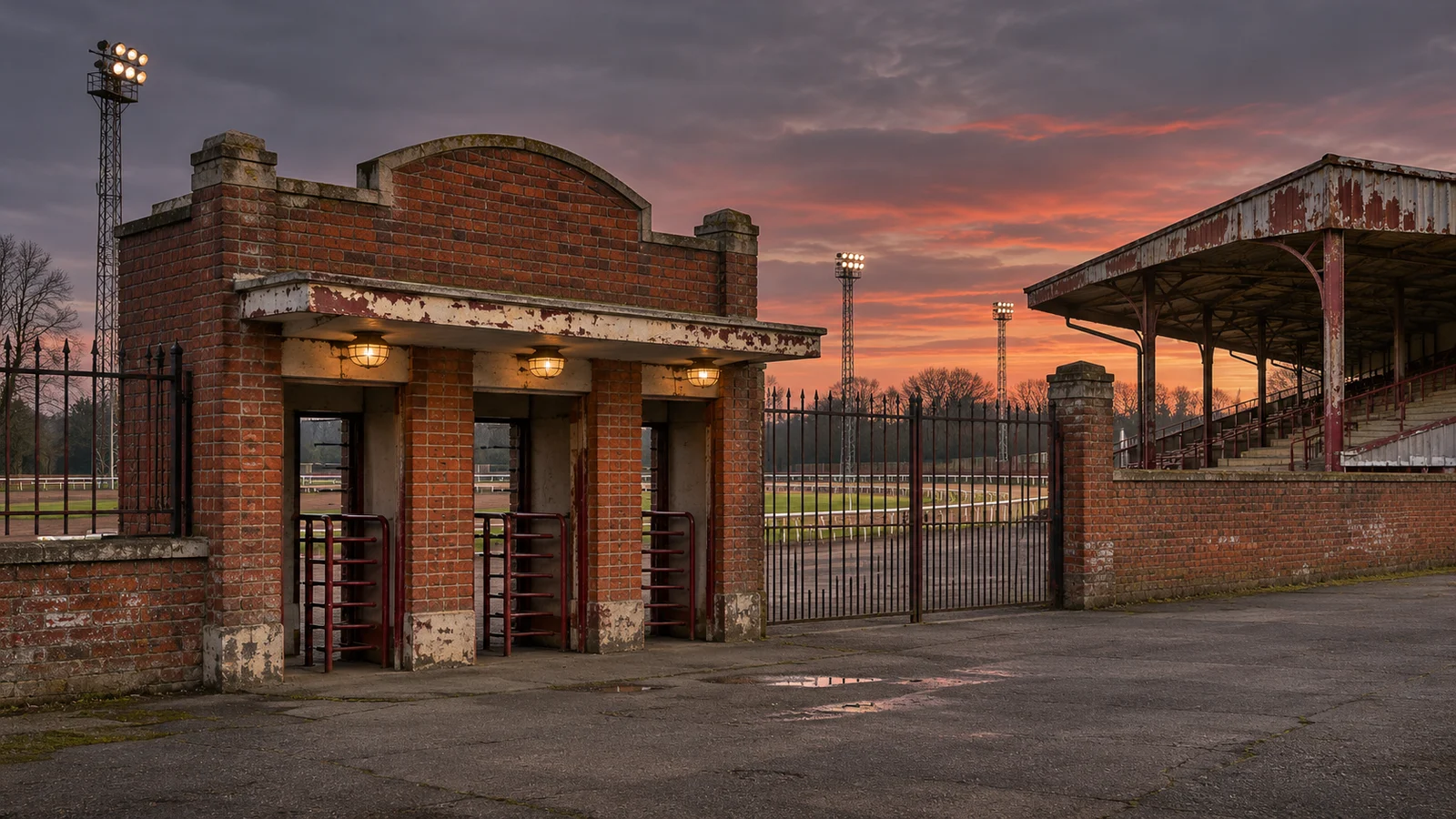
On 24 July 1926, the mechanical hare moved at Belle Vue and six greyhounds followed it into a new piece of British sporting life. One hundred years later, the original Manchester stadium is gone, but the sight and sound of oval-track racing remain instantly recognisable.
The century between those two points is not a simple tale of rise and decline. It contains mass crowds, canine celebrities, betting legislation, television, lost stadiums, welfare failures, reform and a sport still arguing about its future.
Belle Vue and the electric beginning
Greyhounds had raced in other forms long before 1926. What Belle Vue introduced to Britain was modern oval racing behind an electrically propelled artificial hare. The first meeting took place on 24 July and gave an urban audience a fast, floodlit sport that could be staged in the evening.
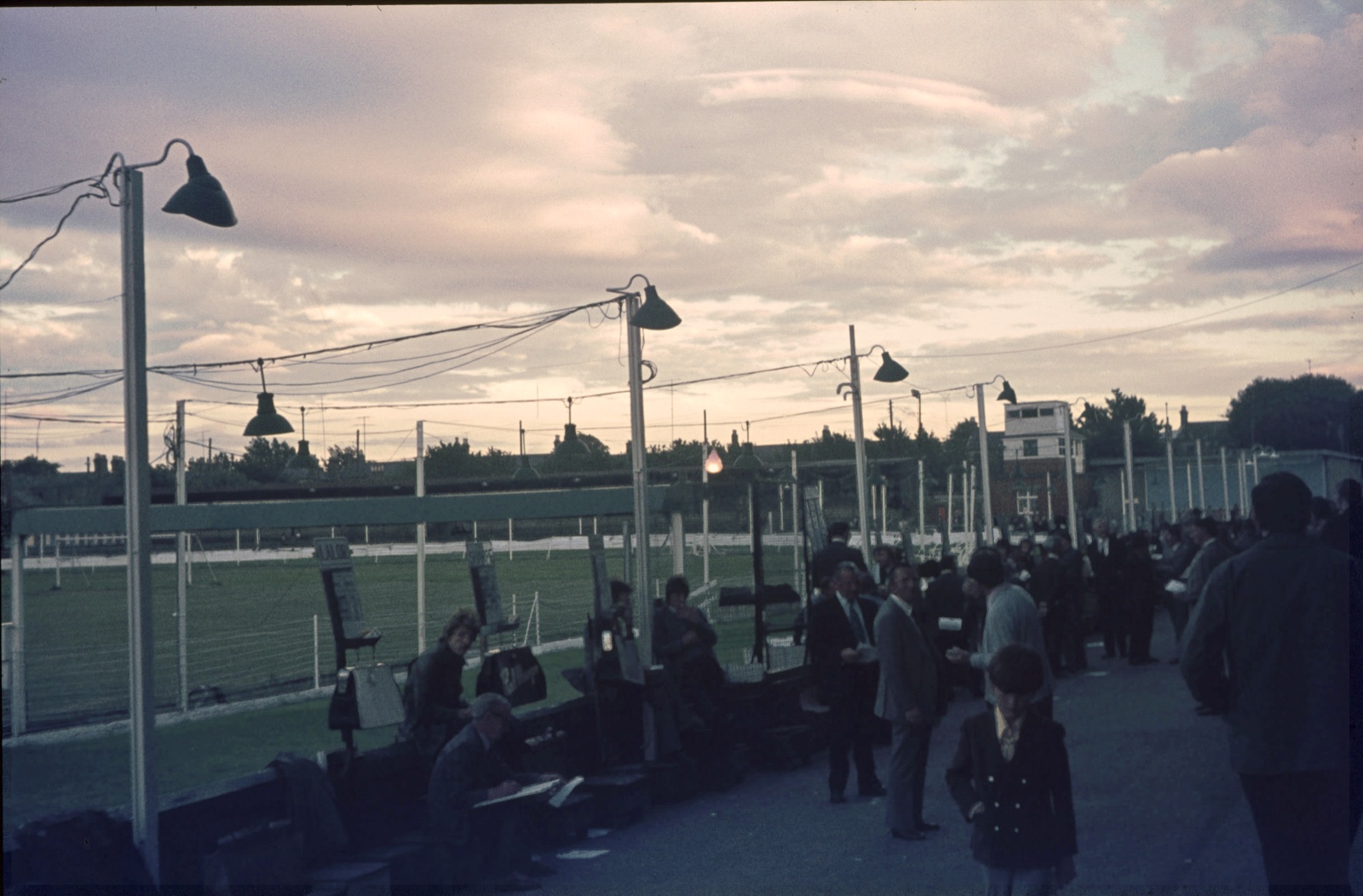
Historian Professor Keith Laybourn describes the early appeal as a bright American-style night out for working people. The timing mattered. Industrial towns had large populations, developing public transport and a demand for affordable leisure. Tracks could offer repeated contests, a crowd, food, drink and legal on-course betting in one compact programme.
The growth was extraordinary. Laybourn's research records around 200 tracks within a decade and annual attendance above 32 million. Greyhound racing did not sit at the edge of popular culture. For a period it belonged near its centre.
The first great greyhound
Every sport needs a figure who escapes its own results pages. Greyhound racing found one in Mick The Miller.
The Irish-bred dog won the English Derby in 1929 and 1930 and became a public celebrity. His record, racing style and repeated success gave newspapers a continuing character rather than a succession of anonymous winners. He appeared in the 1934 film Wild Boy and became the reference point against which later champions were measured.
The important legacy is not only the trophies. Mick showed that spectators follow stories. A champion with a recognisable career can turn a thirty-second race into a season-long narrative.
Stadiums became part of their towns
White City, Wembley, Walthamstow, Hackney, Catford and Wimbledon were more than entries in a fixture list. They became meeting places with their own rhythms, sightlines and local loyalties.
White City in London established itself as the Derby's defining home for generations. Racing Post's centenary account notes that it introduced a photo-finish camera in 1945, an example of the sport adopting technology to decide close results. Its closure in 1984 still carries symbolic weight because a competition can move venue more easily than it can move memory.
The lost tracks also explain why greyhound history is often local. Ask a supporter about the sport's past and the answer may begin with a bus route, a stand, a bookmaker's pitch or the place from which the first bend looked different.
Betting shops changed the night out
The legalisation of betting shops in 1961 gave customers a way to bet away from the stadium. That was convenient for the bettor but weakened the track's exclusive hold on the experience. Later evening opening and the growth of televised and streamed racing widened access to the product while reducing the need to pass through a turnstile.
This tension continues. Media rights and off-course betting can support prize money and exposure, yet a sport built around physical venues loses something when the crowd no longer needs the venue.
Property values added another pressure. Large urban sites attracted developers, and many famous grounds disappeared. Belle Vue itself closed in 2020, leaving the centenary to be marked elsewhere.
The great staying rivalry
Greyhound history is often remembered through contrasts. Few were sharper than Ballyregan Bob and Scurlogue Champ.
Ballyregan Bob built races through relentless excellence and assembled a sequence that reached a then world-record 32 consecutive wins. Scurlogue Champ could appear detached from the contest before producing a spectacular late run. Their Wembley meeting in December 1985 brought together two different ideas of greatness and drew a five-figure crowd.
The race itself did not become the clean duel imagined beforehand, but the anticipation survives. That is another truth about racing memory: the build-up, the characters and the crowd can remain important even when the event refuses to follow the script.
Television created a wider window
Dedicated broadcasts allowed viewers to learn dogs, trainers and competitions beyond their nearest track. Major-race nights on Sky Sports and later specialist programmes gave the sport a regular national window. Streaming now makes far more races available, but abundance is not the same as shared attention.
A scheduled programme could concentrate an audience on one meeting and allow reporting, interviews and replay analysis to build a story. A stream provides access; journalism must still explain why a race deserves notice.
That is one reason an independent archive matters. Results databases preserve the line of form. They do not preserve every argument, journey or human detail around it.
Welfare moved to the centre of the argument
The sport has faced criticism since its early years, first around gambling and public order and increasingly around the treatment and fate of greyhounds. Serious welfare scandals damaged trust and made general assurances inadequate.
Modern licensed racing operates with veterinary requirements, injury recording, track standards and a retirement scheme. GBGB publishes annual injury and retirement data and describes welfare as central to its regulation. Those systems should be reported precisely and tested against outcomes, not accepted or rejected as slogans.
The political landscape has also changed. In Wales, the Prohibition of Greyhound Racing (Wales) Act 2026 received Royal Assent in April 2026, with commencement required within a window running from April 2027 to April 2030. Scotland has held its own debate about prohibition and licensing. The sport enters its second century under scrutiny that is structural, not temporary.
A centenary at a new track
The official centenary gala took place at Dunstall Park in Wolverhampton on 24 July 2026, exactly a century after Belle Vue. The newest venue recreated the six-race shape of the original programme and displayed archive material.
There was a neat contrast in that choice. A sport often described through vanished stadiums marked its past at a new one.
The anniversary should not be used to smooth out difficult history. It is more interesting when the contradictions remain visible: enormous popularity and long decline, devoted care and documented failures, technological reach and shrinking physical presence.
What survives after one hundred years
The basic drama has barely changed. Six dogs, one lure, limited room and a first bend that can turn the expected order inside out.
What surrounds the race has changed repeatedly. The crowd has moved from terraces to betting shops, television and phones. The governing structures have been revised. Welfare evidence is published and contested. Stadiums have closed while a new venue has opened.
The next century is not guaranteed by the existence of the first. It will depend on whether racing can sustain credible welfare, viable venues, meaningful competition and stories that reach beyond a betting screen.
History offers no simple verdict. It does show why the sport matters to its followers and why its future is argued over so intensely. Greyhound racing has never been only the half-minute between trap rise and winning line. It is the century of people, dogs and places gathered around it.
 Centenary Derby at Shelbourne
 Swords Diamond sets Irish St Leger heat standard
 Irish St Leger final joins GRI's YouTube pilot