
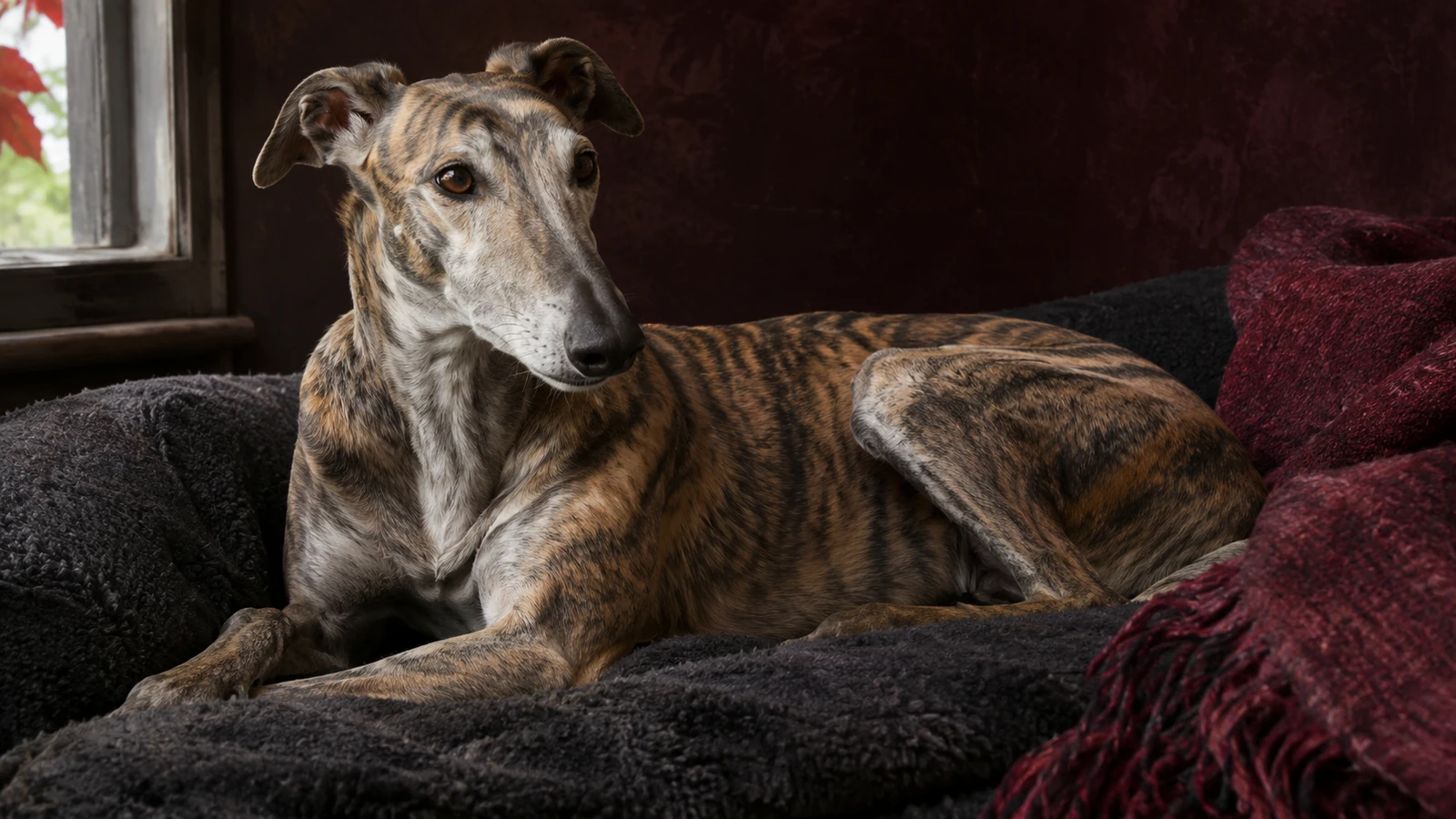
The last race is rarely marked by a grand farewell. A greyhound comes off the track, returns to its kennel and, at some point, a practical conversation begins about where the next part of its life will be spent.
For the public, retirement is often compressed into a single phrase: from track to sofa. The real journey contains more people, paperwork and adjustment than that line suggests.
Retirement starts with a recorded destination
Under the licensed British system, the owner remains responsible for the greyhound and must notify the Greyhound Board of Great Britain of its retirement destination. The governing body's Responsible Homing Policy and racing rules sit behind that record.
The destination is not always a rehoming centre. Some greyhounds remain with their owners or trainers. Others move directly to a private home, enter a homing organisation, go into breeding where appropriate or continue receiving treatment and rehabilitation before a longer-term decision is made.
This distinction matters when reading retirement statistics. A number entering a homing centre is not the total number retiring successfully. It is one route among several. Equally, a recorded immediate destination does not describe the whole of a dog's later life.
What the latest official data says
GBGB publishes annual injury and retirement data for licensed racing. Its current public page states that 1,618 greyhounds moved directly from trainers' kennels into a homing centre in 2025, up from 882 in 2024. The Board says its published dataset records the immediate destinations of greyhounds leaving the sport and has been presented to Defra.
The same page explains that the Greyhound Retirement Scheme has provided more than £7 million to approved homing centres since 2020. Funding is important because retirement does not remove the costs of food, kennelling, veterinary treatment, transport or behavioural support.
Figures from a governing body should be attributed to it, not presented as if they are independent findings. They remain useful, particularly when the definitions and year are kept beside the number. Greyhound Nation will link the underlying dataset when reporting trends and will distinguish dogs homed, dogs entering centres and other recorded destinations.
The work between kennel and home
A racing greyhound is accustomed to a structured routine. A domestic house can contain unfamiliar surfaces, stairs, glass doors, household appliances, doorbells and long periods in a different kind of company.
The Greyhound Trust's National Greyhound Centre uses room-like environments to introduce dogs to ordinary home experiences. That detail explains why good homing work is about matching and preparation, not simply finding an available address.
Assessment can include how a greyhound responds to other dogs, traffic, handling and time alone. Veterinary needs are considered. Some dogs move smoothly into home life; others require a quieter setting, more gradual introductions or specialist support.
There is no honest one-description-fits-all portrait of a retired racer. Greyhounds share breed traits, but each dog arrives with its own health, history and temperament.
How adoption usually works
The Greyhound Trust describes a three-part process: contact a local branch, visit to meet suitable greyhounds and complete a home visit. Its branches know the dogs in their care and try to match the individual to the household rather than treating adoption as an online reservation.
Approved procedures vary between organisations. Prospective owners may be asked about other pets, children, working hours, garden security and experience. The questions are not a test of enthusiasm. They help prevent a placement that is unfair to the dog or unrealistic for the home.
The Trust says its greyhounds are neutered, vaccinated and microchipped before homing, and that adopters receive basic equipment and continuing support. Anyone considering adoption should check the exact provisions with the chosen organisation because policies can change.
Why some retired greyhounds still wear muzzles
Every greyhound in a GBGB trial or race must wear a safety muzzle under Rule 119. That racing requirement prevents biting during close, high-speed competition.
After retirement, a muzzle may still be recommended during introductions, walks or situations that trigger a strong chase response. It does not automatically mean the dog is aggressive. A correctly fitted muzzle is a management tool, and the homing organisation can advise on whether and when it is needed.
The right question is not whether all retired greyhounds should stop wearing one immediately. It is what is safest for this dog, in this setting, during this stage of adjustment.
The first weeks in a home
Quiet is useful. A newly homed greyhound does not need to meet every neighbour, visit a busy high street and master the stairs in one weekend.
Keep the routine predictable. Follow the food, exercise and medication advice supplied by the centre. Use secure doors, gates, collars and leads. Introduce other animals under the recommended conditions and give the greyhound a place where it can rest undisturbed.
Some dogs discover soft beds with comic speed. Others need time to understand that a television, washing machine or post through the letterbox is harmless. Progress is individual, and apparent confidence in one situation does not prove readiness for every other one.
When behaviour or health causes concern, contact the homing organisation or a veterinary professional rather than relying on a general social-media answer.
Welfare does not end at retirement
The most serious version of the retirement question is not whether greyhounds can make good pets. Many clearly do. It is whether the system can secure and support an appropriate destination for every dog leaving racing.
That requires transparent records, enough homing capacity, money for care and honest reporting when the route is delayed or unsuccessful. It also requires attention to injuries that may affect retirement and to the long-term responsibility of owners.
Official statistics, charity experience and individual cases each show a different part of the picture. None should be used to erase the others.
How racing followers can help
Homing a greyhound is one form of support, but it is not the only one. Centres need walkers, foster carers, transport, fundraising and people willing to share accurate information about available dogs. A foster placement can reveal how a dog behaves in a home and free kennel space for another arrival.
Support the organisation doing the work, ask how funds are used and avoid promising that every greyhound is effortless. The best advertisement for the breed is a successful, properly matched home.
Retirement is not a public-relations ending added to a racing story. It is part of the greyhound's life and part of the sport's responsibility. The last line on the form should be the point at which careful work changes direction, not where attention stops.
 Centenary Derby at Shelbourne
 Irish St Leger final joins GRI's YouTube pilot
 Droopys Plunge wins Hove's Gold Collar