

A grade printed beside a greyhound race looks like a complete answer. A1 appears stronger than A5, an open race looks stronger than both, and the temptation is to treat the letters and numbers as a ladder that works everywhere.
That is close enough to be dangerous.
Grades are essential to British greyhound racing, but they belong to a track, a distance and a racing manager's assessment of the local racing strength. Read them as context, not as a national handicap mark.
Why graded racing exists
The purpose of grading is competitive balance. A racing manager selects runners whose current ability should allow them to contest a fair race under the conditions on the card. Without that process, routine meetings could repeatedly match greyhounds of very different standards.
The GBGB rules define a graded race as one in which the greyhounds are selected by the racing manager from those in the charge of any trainer. Before a greyhound runs its first graded race at a particular licensed track, qualification requirements apply. Those include satisfactory trials or qualifying races at that venue under the conditions in Rule 48.
This local qualification matters. A greyhound is not being placed into an abstract national division. It is joining the racing strength of a particular course.
What A1, A2 and the lower numbers mean
On many British cards, the letter A is used for the track's principal four-bend graded distance. A1 is normally the strongest A grade at that venue, followed by A2, A3 and so on. Other letters commonly identify different types or distances, such as D for sprint races and S for staying races.
The exact menu of grades is not universal. One track may run A1 to A8; another may extend the sequence further. A venue can alter its grading structure as the size and ability range of its racing strength changes. Romford, for example, expanded its structure in 2019 and redistributed runners across ten A grades. That did not make every greyhound slower overnight; it changed the local labels used to build competitive races, which is why the race title and distance must always be read together rather than inferred from the letter alone.
Is A1 at one track equal to A1 at another?
No reliable conversion table makes every A1 equivalent.
Tracks differ in distance, circumference, bends, surface behaviour and the depth of the available racing strength. A greyhound competing in A1 at a smaller local pool may face a different standard after moving elsewhere. Even when two venues use the same distance, the races have not been graded against one shared national population.
This does not make cross-track comparison impossible. It makes it a piece of form analysis. Look at trial times at the new venue, open-race evidence, the quality of previous opponents and how the greyhound's running line suits the course. Treat the old grade as background rather than a guarantee.
How does a greyhound move up or down a grade?
Results matter, but grading is not a mechanical rule in which every winner rises exactly one level and every last-placed runner drops.
The racing manager considers the performance and the wider body of form. Winning time, calculated time, the way the race unfolded and the standard of opposition can all contribute to the assessment. A greyhound that wins after receiving an unusually clear passage may be viewed differently from one that dominates a strong field on the clock. A runner beaten after severe crowding may have shown more ability than the finishing position suggests.
That judgement is one reason a form reader should not assume a grade change tells the whole story. The move is useful information. The evidence behind it is more useful.
What does OR mean?
OR is commonly used on racecards for an open race. Under Rule 64, an open race or series is advertised in the GBGB Calendar and entries are normally received from greyhounds in the charge of any trainer, although the published conditions may restrict who can enter.
Open races may be ordinary one-off contests, heats and finals, or stages of major competitions. Conditions can be based on distance, age, sex, previous wins or other eligibility requirements. A maiden open, for example, can restrict entry to greyhounds that have not won an open race by the stated closing point.
An OR line does not mean every open race contains championship-level runners. Read the conditions and the opposition. The open category explains how the race was organised, not the exact quality of every field.
Why grade changes matter on the card
A move into stronger company asks whether recent improvement can survive greater pressure. The new race may contain more early pace, fewer obvious weaknesses or runners able to punish a poor break.
A drop in grade can make a greyhound more competitive, but it is not automatically a signal to bet. Ask why the runner has been dropping. Has it been meeting stronger dogs while running creditably, or has its own performance level also declined? Does today's draw solve the problem seen in recent races?
Staying in the same grade can be informative too. A greyhound may be repeatedly competitive without winning, or repeatedly finding the same trouble because the race shape does not change.
The grade frames the question, but it does not answer it without the race around it.
How grades interact with traps and seeding
Competitive ability is only one part of assembling a race because the racing manager must also account for running lines. Greyhounds may be classified as railers, middle seeds or wide seeds, and the trap allocation is designed to place those preferences in a workable order.
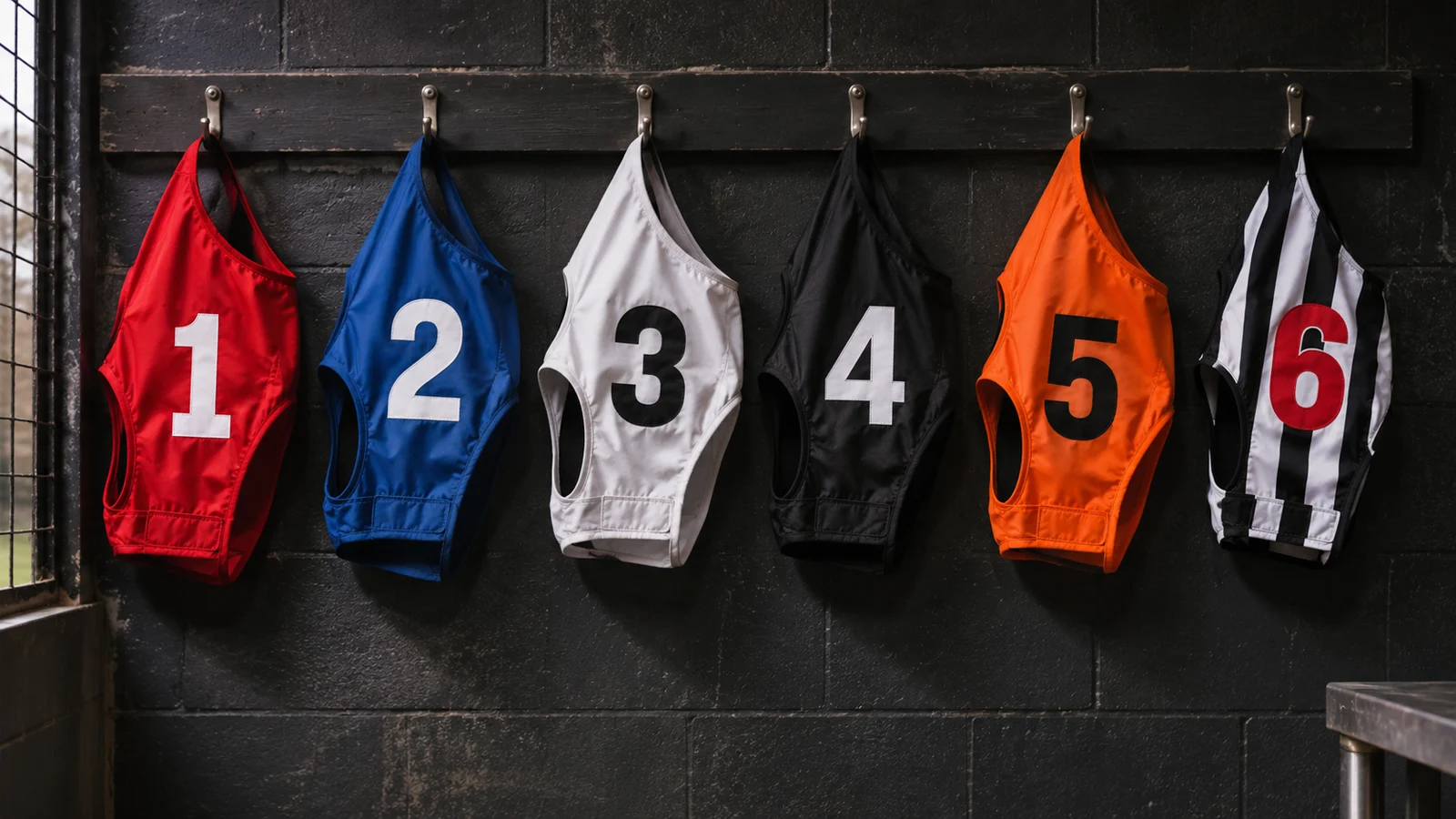
A well-matched grade can still produce a strong tactical advantage if one runner has clear space and two others want the same ground. That is why trap colours and seeding belong beside the grade in any serious reading of the card.
Common grading mistakes
The first is assuming a lower number always means a better betting proposition, when it means stronger local company rather than better value.
The second is comparing grades across tracks without adjustment, even though an identical label does not establish identical ability.
The third is ignoring distance, since an A-grade performance over a four-bend trip and an S-grade performance over a longer trip ask different physical and tactical questions.
The fourth is treating one regrade as a secret message. Racing managers are trying to create competitive races, not communicate betting advice.
Finally, do not erase the race itself. A greyhound can be correctly graded and still receive a difficult draw, miss the break or meet crowding.
A practical way to use the grade
Read it in three passes.
First, establish where today's race sits within that track's own structure. Is it near the top, middle or lower end of the relevant distance category?
Second, trace each runner's recent movement. Note who is rising, dropping or returning after trials, but read the performances that caused those changes.
Third, test the field as a race. Compare early pace, seeding and likely routes to the first bend. The strongest recent time may be less useful than a repeatable ability to secure a clear run.
Our complete guide to reading greyhound form brings those passes together.
Grades make the sport more intelligible because they tell you the level at which a local racing manager believes a greyhound can compete. Their value disappears only when the label is asked to do more than that.
 How greyhound racing works: a beginner's guide
 Greyhound sectional times explained
 Greyhound trap colours and seeding explained