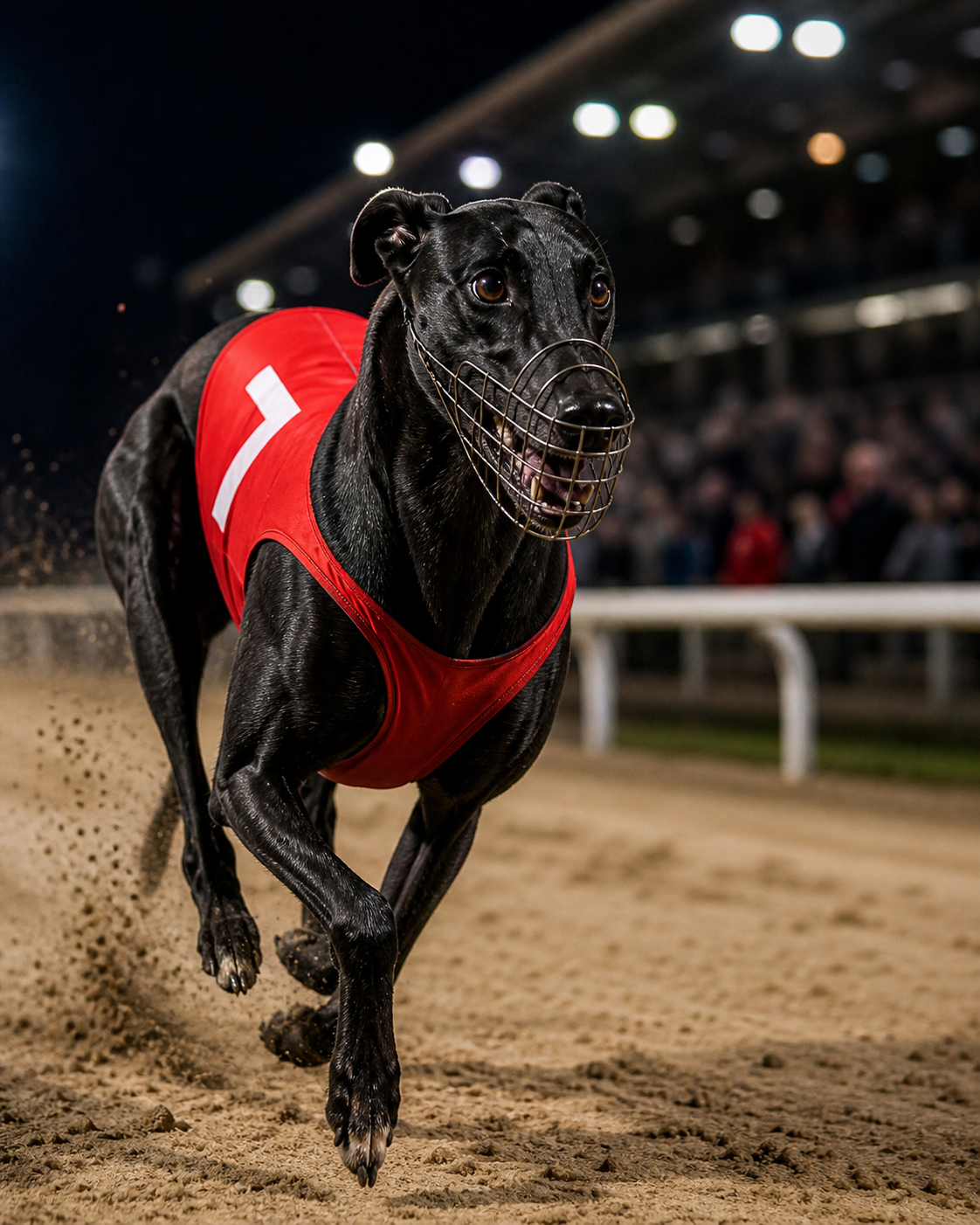
The first greyhound race you watch can feel quicker than the explanation that comes with it. Six runners walk behind the traps, the jackets settle into a row of colours, a mechanical lure moves away and the whole contest is decided in less time than it takes to order a drink.
Yet the race is not random movement at high speed. There is a structure to the evening, a reason for the trap positions and a shape to the contest. Once those pieces are visible, greyhound racing becomes much easier to follow.
What happens before a greyhound race?
At a licensed British meeting, the public part of the race begins well after the official checks have started. Greyhounds are kennelled and identified, their weight is recorded, and a veterinary surgeon is present at the meeting. Before a trial or race, the paddock procedure includes checking the racing jacket and muzzle. A greyhound does not simply arrive at the boxes and run.
The parade gives spectators a first look at the field. This is useful, but it should not become a beauty contest. A relaxed-looking greyhound may run poorly; a lively one may be behaving exactly as it always does. Paddock observation becomes evidence only when it is placed beside reliable knowledge of the individual dog.
The runners are then loaded into starting traps. Under the current Greyhound Board of Great Britain rules, trap one is nearest the inside rail and the numbers run outwards across the course. Most British races have six runners, though a race may contain a vacant trap after a withdrawal.
The six colours
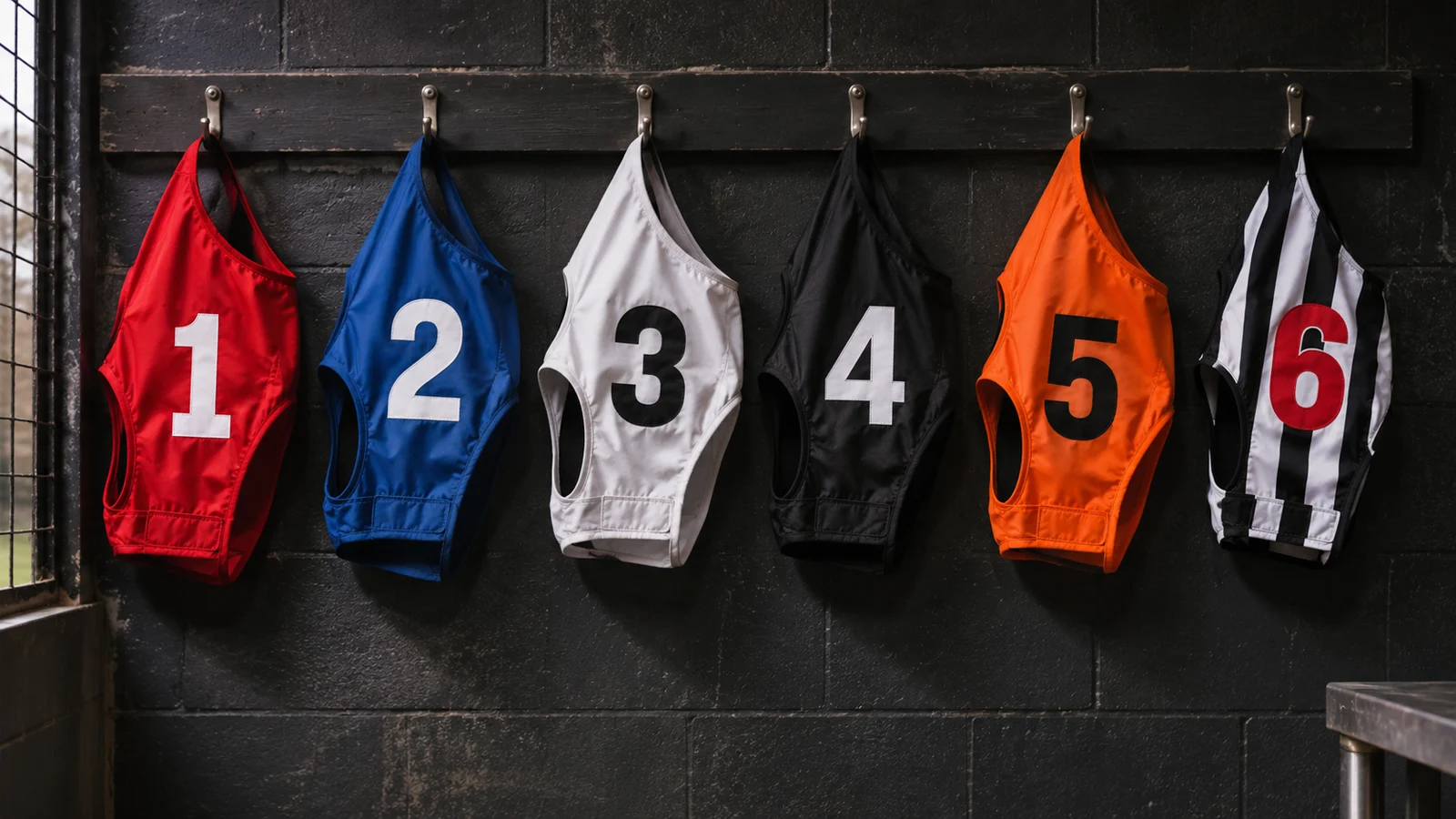
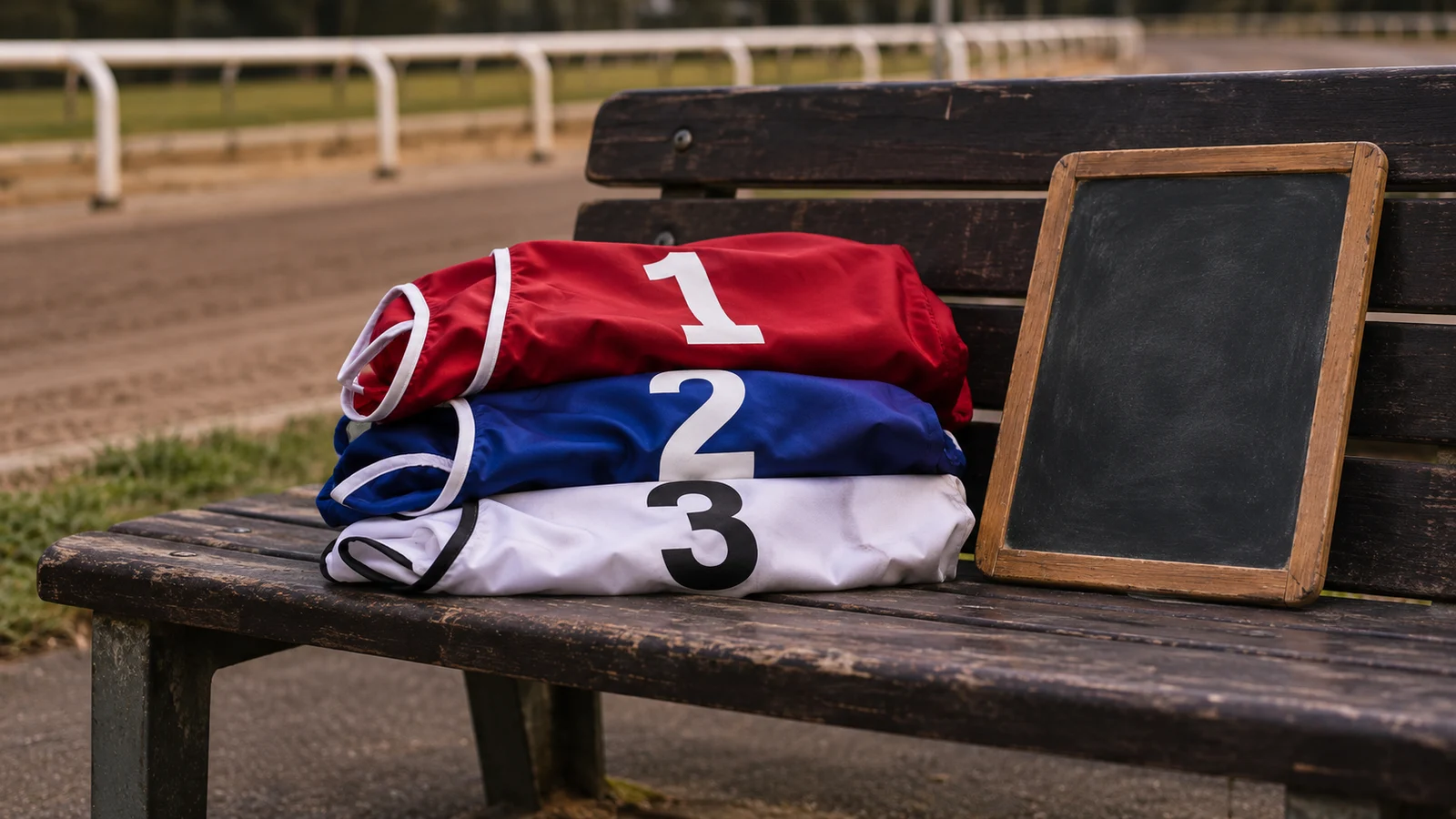
The jacket colours allow each runner to be recognised at speed:
- Trap 1: red
- Trap 2: blue
- Trap 3: white
- Trap 4: black
- Trap 5: orange
- Trap 6: black and white stripes
The number, not the colour of the greyhound's coat, identifies the runner. Reserve jackets and the less common additional trap numbers have their own provisions in the rules, but the six-colour sequence is the one a newcomer needs first.
What are the greyhounds chasing?
The greyhounds chase a mechanical lure around an oval track. The lure is controlled from the track and runs ahead of the field. The starter, hare controller, judge, timekeeper and stewards have distinct jobs under the rules.
When the traps open, the first few strides matter enormously. A fast start can give a runner an unobstructed line into the opening bend. A slower start may leave it behind other greyhounds, where it has to change pace or direction. That is why a result cannot always be understood from the finishing order alone.
Watch the run to the first bend. Which greyhound reaches it in front? Does a runner on the inside move away from the rail, or does one from the outside cut across? Is there enough room for all six preferred lines? The answers explain much of what follows.
Graded races and open races
British cards contain different types of contest. In a graded race, the racing manager selects greyhounds from the track's racing strength with the aim of producing a competitive field. The grade is tied to that racecourse and distance. It is not a national rating that can be transferred unchanged from one venue to another.
An open race is advertised in the GBGB Calendar and normally accepts entries from greyhounds in the care of any trainer, subject to the race conditions. Open-race performers therefore travel between tracks more often, and the conditions can restrict entry by age, sex, experience, distance or previous achievement.
There are also intertrack races between teams representing licensed racecourses. For a new follower, the simplest distinction is this: graded racing is assembled locally by the racing manager, while open racing is entered under published conditions.
Our separate guide to greyhound racing grades explains why an A1 at one track should not automatically be treated as equal to an A1 somewhere else.
Distance changes the race
The distance is printed on the card, usually in metres on British form. A short sprint places even more pressure on the break and early position. A standard four-bend race gives the field more time to establish a shape, while longer races ask different questions about pace and stamina.
Do not treat labels such as sprint, standard and staying as if they create identical distances at every venue. Tracks have different circumferences, starting points, bend profiles and run-ins. Compare performances at the same track and distance first. Only then decide how much weight to give form from elsewhere.
How is the winner decided?
The judge determines the order in which the greyhounds reach the winning line. A photo finish can be used when required. The official result records the winner, placed runners, winning time and beaten distances, alongside other race information.
The time belongs to the conditions in which it was recorded. Track preparation and the official going allowance can affect comparison. So can crowding. A greyhound that has to check its stride may record a slower time without having lost its underlying ability.
This is the central lesson of race reading: the clock is evidence, not a verdict.
Three things to watch during a race
First, watch the break. A runner that repeatedly leaves the traps quickly has a different tactical profile from one that relies on finding room later.
Second, watch the approach to the first bend. This is where six intended paths meet a limited amount of space. The draw only becomes meaningful when combined with how each greyhound tends to run.
Third, watch what happens after trouble. Some greyhounds regain momentum; others lose their position and never recover. A strong finish can be encouraging, but it may also be the result of leaders tiring, so use the replay and written comments to separate those possibilities.
How to read a racecard without drowning in numbers
Begin with today's conditions: track, distance, grade and trap, then scan the recent form for comparable runs and repeated behaviour rather than one exceptional line.
A sectional or split time can help identify early pace, but only when the measurement is comparable. The finishing position shows where a greyhound ended; the comments and bend positions help explain how it got there. Our full race-form guide sets out a two-pass method for joining those details together.
Do not start by circling the fastest raw time. A figure earned in a clear run at one track may not describe what will happen from a different draw in a different grade.
Can you enjoy greyhound racing without betting?
Yes. The race, the dogs, the training stories, ownership journeys and history stand on their own. Many followers care about breeding lines, local kennels, major competitions or the progress of a young greyhound without placing a bet.
If you do bet, it should be an optional part of the experience. Set a limit first, never chase a loss and remember that informed analysis still deals in uncertainty. A well-read race can produce a losing selection; a poorly reasoned bet can win. One outcome does not prove the quality of the decision.
The easiest way into the sport
Choose one track and follow it for several meetings. Learn where the sectional point is measured, what the usual distances are and how the bends appear to affect different running lines. Familiarity turns abbreviations into races and races into recognisable patterns.
Then watch the same greyhound more than once.
The sport opens up when names stop being six entries on a card. You begin to recognise the sharp breaker, the railer searching for room and the strong runner that needs the leaders to come back. The race still lasts half a minute. You simply see more of it.
 Greyhound trap colours and seeding explained
 Greyhound racing grades explained
 Greyhound sectional times explained